jake@tuxwindowcleaning.com

How to Hang Christmas Lights on Your House in Albuquerque
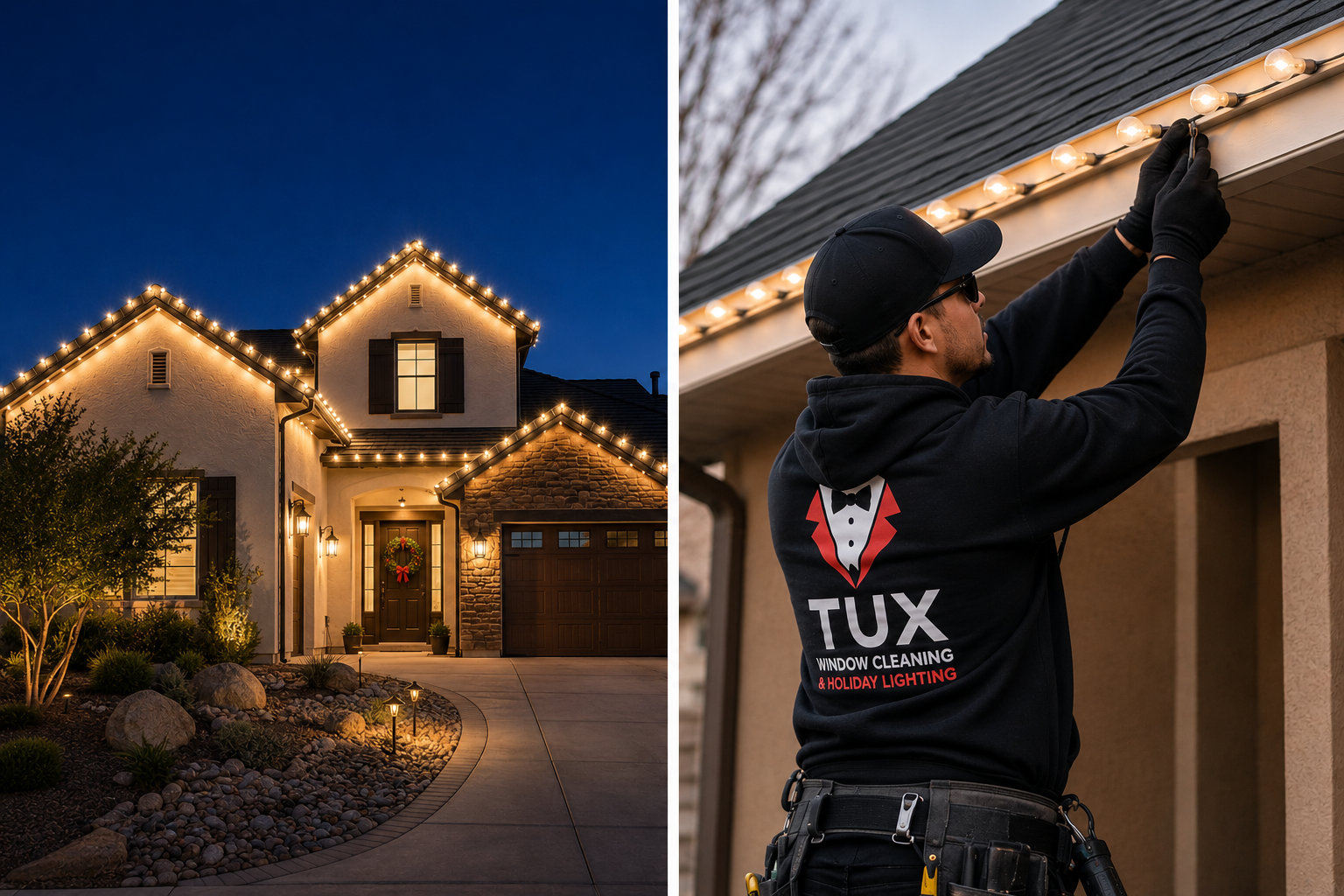
How to Hang Christmas Lights on Your House in Albuquerque
Hanging holiday lights in Albuquerque takes more than untangling a few strands and hoping for the best. With bright sun, dry winter air, chilly nights, stucco exteriors, flat rooflines, and occasional wind, a little planning helps your display look clean, stay secure, and avoid damage to your home. This guide walks you through how to hang Christmas lights on house exteriors safely, neatly, and with a look that fits Albuquerque homes.
What should you plan before hanging Christmas lights in Albuquerque?
Before you climb a ladder, decide where the lights will go, how they will be powered, and what kind of clips or anchors your home can handle. Albuquerque Christmas lights often look best when they follow strong architectural lines: roof edges, portals, parapets, vigas, windows, garage doors, walkways, and desert landscaping. Planning first keeps you from buying the wrong length, overloading outlets, or attaching lights in a way that chips stucco, damages roofing, or leaves cords stretched across walking areas.
Use a simple sketch of the front of your home. Mark each area you want lit, then measure those areas with a tape measure from the ground whenever possible. Add a little extra length for corners, roofline changes, and the distance to your outlet, but avoid buying so much extra that you have bulky coils of cord tucked behind shrubs or along gutters.

Gather the right lights, clips, and safety gear
The right supplies make the job faster and reduce the temptation to improvise. Choose outdoor-rated lights and extension cords only, even if your display is under a covered portal or entryway. Indoor lights are not made for moisture, dust, temperature swings, or outdoor wear.
Your basic checklist should include:
-
Outdoor-rated LED Christmas lights
-
Outdoor-rated extension cords
-
A timer or smart outdoor plug rated for exterior use
-
Plastic light clips for gutters, shingles, roof edges, or parapets
-
Adhesive outdoor clips for smooth surfaces where appropriate
-
Zip ties or twist ties for railings and sturdy branches
-
A sturdy ladder with non-slip feet
-
Work gloves and comfortable shoes with traction
-
Tape measure and notepad
-
Replacement bulbs or fuses if your light set uses them
LED lights are a practical choice for many albuquerque nm christmas lights displays because they stay cooler and use less electricity than older incandescent strands. They also come in a wide range of color temperatures, from warm white to bright multicolor. If you want a polished look, buy matching lights at the same time so the brightness and color tone stay consistent across the whole house.
1. Test every strand before installation
Plug in each light strand before it goes outside. It is much easier to find a dead section on the ground than after it is clipped along a second-story edge. Check for cracked sockets, exposed wire, loose plugs, missing bulbs, and flickering sections.
Lay working strands in the order you plan to install them. If one section will run over the garage and another around windows, separate them before you begin. This small step prevents mid-project confusion and helps you avoid dragging light strands across gravel, cactus, or roofing materials.
If a strand does not work, try the manufacturer’s troubleshooting steps, such as replacing a fuse or checking loose bulbs. Do not use lights with damaged insulation or repaired wiring. Outdoor holiday lighting should be festive, not risky.
2. Choose attachment points that protect your exterior
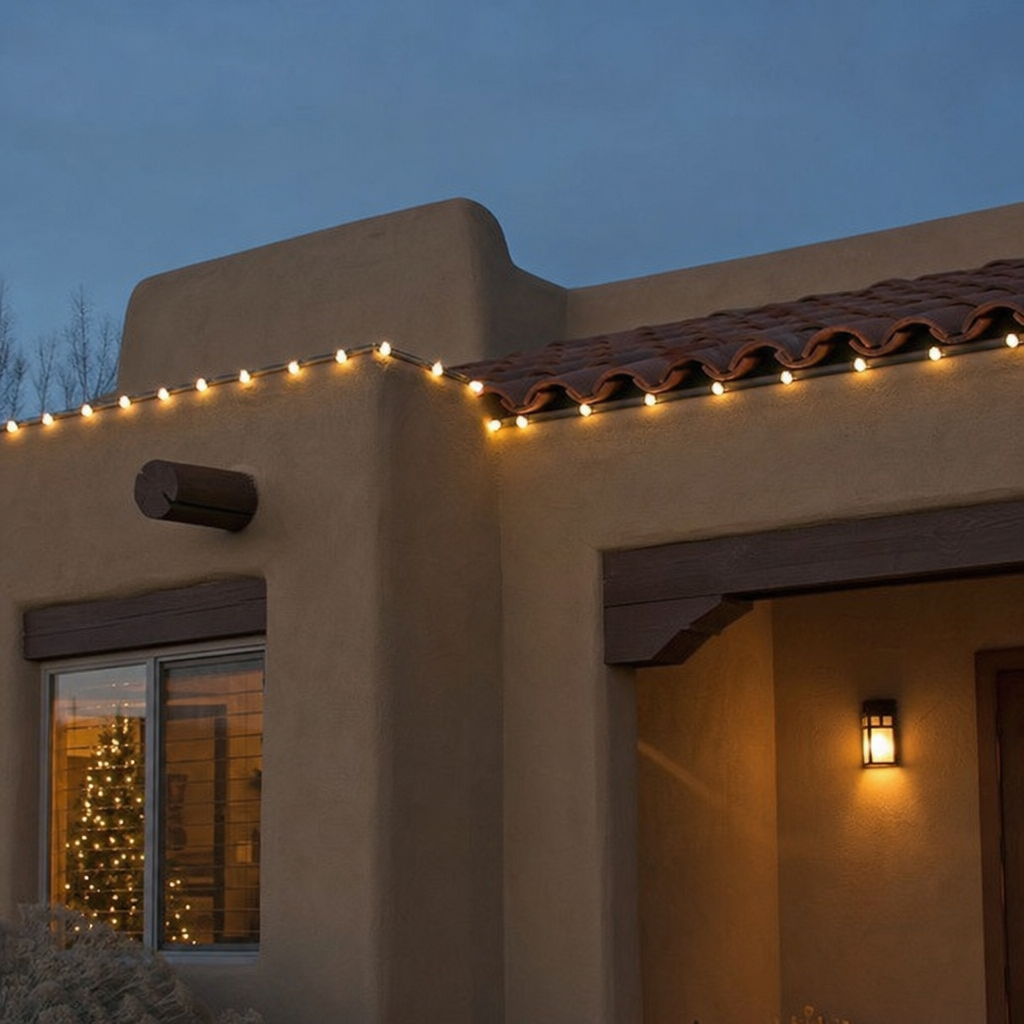
Many Albuquerque homes have stucco, tile roofs, metal trim, parapets, or flat roof sections instead of traditional gutters. That means the best hanging method depends on the surface. Avoid nails, staples, and screws unless you are using a permanent mounting system designed for exterior lighting. Puncturing stucco, fascia, or roofing can invite water problems and leave visible damage after the season.
For common home features, consider these options:
-
Gutters: Use gutter clips that slide over the front lip and hold bulbs in the same direction.
-
Shingle edges: Use shingle tabs only where they can slide in gently without lifting or stressing roofing material.
-
Stucco walls: Use removable outdoor adhesive clips on clean, dry, smooth spots, understanding that textured stucco may not hold adhesive well.
-
Parapets and flat roof edges: Use clips made for rooflines or weighted, non-damaging solutions that do not penetrate roofing.
-
Railings and posts: Use zip ties or reusable clips, then trim or hide the tie ends for a neat finish.
-
Trees and shrubs: Wrap loosely, leaving room for movement and avoiding tight loops around living branches.
The goal is to secure the lights without forcing the attachment. If a clip does not fit naturally, switch clip styles rather than bending the light socket, prying at trim, or wedging material under roofing.
3. Map your power safely
Plan power from the outlet outward, not from the roofline backward. Use exterior outlets when available, and avoid running cords through windows or doors where they can be pinched. A cord that is crushed by a door can wear down quickly and create a hazard.
Keep plugs and connections off the ground when possible. In Albuquerque, dry weather is common, but winter storms, irrigation overspray, and melting frost can still bring moisture to outdoor connections. Use outdoor-rated cord covers or protective connection boxes if needed, and place connections where they will not sit in puddles or collect debris.
Do not connect more strands end-to-end than the light manufacturer allows. Different products have different limits, especially when mixing older lights with newer LEDs. If you need more coverage, use multiple runs from a safe power source instead of creating one overloaded chain.
4. Hang roofline lights first
Start with the highest and most visible lines, such as the front roof edge, parapet, or garage roofline. These areas define the shape of the display. When they are straight and evenly spaced, the whole house looks more intentional.
Work slowly from one end to the other. Attach a clip every bulb or at consistent intervals based on the light style. Step back often from the ground to check spacing, especially around corners and roofline changes. What looks straight from a ladder can look uneven from the street.
If your home has a flat roof, do not walk near edges casually or step onto surfaces you are unsure about. Some roof materials are not meant for frequent foot traffic, and tile can crack under pressure. When in doubt, use a ladder from the ground or hire a professional familiar with local roof types.

5. Frame windows, doors, and architectural features
Once the main roofline is in place, add lights around windows, doors, columns, portals, or vigas. These details create depth and make your display feel designed rather than simply outlined. In neighborhoods with Southwestern architecture, warm white lights can highlight earthy stucco tones, wood beams, and courtyard entries beautifully.
Use clips that hold the wire straight and keep bulbs facing the same direction. Avoid pulling strands tight across corners. A little slack helps prevent strain when temperatures drop or wind moves the strand.
For doors and walkways, keep cords away from thresholds, steps, and high-traffic areas. If a cord must cross a path, reconsider the layout or use a properly rated cord cover. Guests should be able to enjoy your albuquerque christmas lights without stepping over wires.
6. Add landscape lighting with restraint
Desert landscaping gives Albuquerque homes great opportunities for holiday lighting. Low shrubs, small trees, courtyard walls, agave silhouettes, and gravel paths can all become part of the display. The trick is to enhance the yard without overwhelming it.
Wrap tree trunks loosely and avoid bending brittle branches. For shrubs, net lights can create even coverage quickly, while small strands can be woven gently through the outer growth. Keep lights away from sharp cactus spines when possible, and wear gloves if you are working near desert plants.
Use pathway lights or low stakes to guide the eye toward the entry. A simple roofline plus a lit walkway can look more refined than a yard packed with unrelated colors and shapes. If you use inflatables or figures, anchor them securely because open yards and winter gusts can shift lightweight decorations.
7. Set timers and check the display at night
After everything is connected, use an outdoor-rated timer to control when the lights turn on and off. Timers make your display easier to manage and help prevent lights from staying on all night by accident. Set the timer after you test the full display, not before, so you know every strand is working.
View the house from the street after dark. Look for dark gaps, bright clusters, dangling wires, crooked sections, or cords that catch attention. Small adjustments at this stage make a big difference.
Take photos from a few angles. Photos reveal uneven spacing and color mismatches your eyes may ignore in person. They also give you a reference for next year, so reinstalling your Albuquerque Christmas lights becomes faster.
How do you hang Christmas lights safely on a ladder?
Use a ladder only on stable, level ground, keep three points of contact, and move the ladder instead of leaning far to the side. Safety matters more than finishing quickly, especially when working near roof edges, gravel, sloped driveways, or uneven landscaping. If an area feels hard to reach, it is better to change the design or call a professional than to stretch from an unsafe position.
Follow these ladder habits every time:
-
Place the ladder on firm ground, not loose rock or soft soil.
-
Keep your belt buckle between the ladder rails while working.
-
Carry small batches of clips and lights instead of overloaded bundles.
-
Ask another adult to spot the ladder when possible.
-
Avoid hanging lights during strong wind, rain, snow, or icy conditions.
-
Stay away from overhead electrical lines and service drops.
Do not climb onto a roof unless you know it is safe and suitable for foot traffic. Albuquerque homes vary widely in roof style and material, and some surfaces are easy to damage. Professional installation may be worth considering for tall rooflines, steep access points, fragile tile, or large displays.
Troubleshoot common lighting problems
Even a careful installation can need a few fixes. If a section is dark, check the simplest possibilities first: the outlet, timer, plug connection, fuse, and any loose bulbs. If the lights worked on the ground but not after installation, a connection may have pulled loose while the strand was being clipped.
If strands sag after a day or two, add more clips rather than tightening the wire aggressively. Sagging often happens when clips are spaced too far apart or when a corner is carrying too much tension. For wind-prone areas, use extra clips at corners, roofline transitions, and vertical drops.
If adhesive clips fall from stucco, switch to a different mounting location or a non-adhesive method. Dust, texture, cold temperatures, and uneven surfaces can all reduce adhesion. Clean smooth surfaces first and let them dry fully before applying adhesive products.
Remove and store lights the right way
Taking lights down carefully protects both the lights and your home. Remove clips gently instead of ripping strands away from the surface. Pulling too hard can damage sockets, stretch wires, or chip delicate finishes.
Wrap each strand around a reel, cardboard panel, or storage spool. Label sections by location, such as “garage roofline” or “front window,” so next year’s setup is easier. Store lights in a dry container away from crushing weight, pests, and extreme heat.
Before packing everything away, discard damaged strands and save only clips that still grip properly. A clean storage system turns next season’s project from a frustrating tangle into a straightforward repeat.
Finish with a display that fits your home
Learning how to hang Christmas lights on house exteriors is really about planning, safe attachment, and consistent spacing. In Albuquerque, that also means respecting stucco surfaces, roof materials, desert landscaping, and changing winter weather. Start with the roofline, add architectural accents, keep cords safe, and check the final look after dark.
Whether your style is simple warm white, colorful and playful, or a full yard display, the best albuquerque nm christmas lights feel secure, balanced, and easy to maintain. Take your time, use the right outdoor-rated materials, and let your home’s shape guide the design.